History of Cartography Project’s Sixth Volume Now Available Online

The History of Cartography Project’s sixth volume, covering the twentieth century, came out three years ago. Edited by Mark Monmonier, it comprised two physical books and nearly two thousand pages and had a list price of $500. That physical edition is still available (e.g. on Amazon), but as of this month it’s available online for free in PDF form, like the first three volumes in the series. (Volumes four and five are still being prepared; volume four, covering the European Enlightenment, is slated to arrive in 2019.) [NLS]

A Collection of Rand McNally Road Atlas Covers

The Rand McNally Road Atlas has long been a staple of North American travellers. The company—still around—is celebrating the atlas’s 95th edition by putting out a retrospective volume of the road atlas’s covers: American Journey: A Treasury of Rand McNally Road Atlas Covers (Rand McNally, 3 June) is a slim hardcover volume: 96 pages, enough for one page per edition. CNN Travel has coverage. [WMS]

New Books for June 2018

Cartography.

The big book coming out this month, in all senses of the word, is Cartography. by our friend Kenneth Field (Esri Press, 28 June). “This sage compendium for contemporary mapmakers distills the essence of cartography into useful topics, organized for convenience in finding the specific idea or method you need. Unlike books targeted to deep scholarly discourse of cartographic theory, this book provides sound, visually compelling information that translates into practical and useful tools for modern mapmaking. At the intersection of science and art, this book serves as a guidepost for designing an accurate and effective map.” A hardcover edition is also available.

Borders, Trade and Diplomacy

June saw the publication of a new paperback edition of Jerry Brotton’s Trading Territories: Mapping the Early Modern World (Reaktion, 18 June), in which the author “shows that trade and diplomacy defined the development of maps and globes in this period, far more than the disinterested pursuit of scientific accuracy and objectivity, and challenges our preconceptions about not just maps, but also the history and geography of what we call East and West.” Amazon

Carving Up the Globe: An Atlas of Diplomacy, edited by Malise Ruthven (Belknap/Harvard University Press, 18 June), “illustrates treaties that have determined the political fates of millions. In rich detail, it chronicles everything from ancient Egyptian and Hittite accords to the first Sino–Tibetan peace in 783 CE, the Sykes–Picot Agreement of 1916, and the 2014 Minsk Protocol looming over the war in Ukraine. But there is more here than shifting territorial frontiers. Throughout history, diplomats have also drawn boundaries around valuable resources and used treaties to empower, liberate, and constrain. Carving Up the Globe encompasses these agreements, too, across land, sea, and air. Missile and nuclear pacts, environmental treaties, chemical weapons conventions, and economic deals are all carefully rendered.” Amazon

Steven Seegel’s Map Men: Transnational Lives and Deaths of Geographers in the Making of East Central Europe (University of Chicago Press, 29 June) “takes us through some of these historical dramas with a detailed look at the maps that made and unmade the world of East Central Europe through a long continuum of world war and revolution. As a collective biography of five prominent geographers between 1870 and 1950—Albrecht Penck, Eugeniusz Romer, Stepan Rudnyts’kyi, Isaiah Bowman, and Count Pál Teleki—Map Men reexamines the deep emotions, textures of friendship, and multigenerational sagas behind these influential maps.” Amazon, iBooks

The U.S. Navy and Cartography

To Master the Boundless Sea: The U.S. Navy, the Marine Environment, and the Cartography of Empire by Jason W. Smith (University of North Carolina Press, 8 June). “By recasting and deepening our understanding of the U.S. Navy and the United States at sea, Smith brings to the fore the overlooked work of naval hydrographers, surveyors, and cartographers. In the nautical chart’s soundings, names, symbols, and embedded narratives, Smith recounts the largely untold story of a young nation looking to extend its power over the boundless sea.” (The ebook version was out in April.) Amazon

Multispectral Martellus

Henricus Martellus’s World Map at Yale (c. 1491): Multispectral Imaging, Sources, and Influence by Chet Van Duzer (Springer, 25 June) reports on the results of multispectral imaging of a map previously thought illegible due to faded text. “This volume provides transcriptions, translations, and commentary on the Latin texts on the map, particularly their sources, as well as the place names in several regions. This leads to a demonstration of a very close relationship between the Martellus map and Martin Waldseemüller’s famous map of 1507. One of the most exciting discoveries on the map is in the hinterlands of southern Africa. The information there comes from African sources; the map is thus a unique and supremely important document regarding African cartography in the fifteenth century. This book is essential reading for digital humanitarians and historians of cartography.” Amazon

Map Books of 2018 Updated

The Map Books of 2018 page has been updated to include several new forthcoming books and to reflect changes to previously announced publication dates (which happens quite a lot, it seems).

New Books for May 2018

Art

Helen Cann’s How to Make Hand Drawn Maps: A Creative Guide With Tips, Tricks, and Projects (Chronicle, 1 May paperback, 22 May ebook). “With wonderful examples and easy-to-follow instructions, this beautifully illustrated how-to book makes it simple and fun to create one-of-a-kind hand-drawn maps. Helpful templates, grids, and guidelines complement a detailed breakdown of essential cartographic elements and profiles of talented international map artists.” Amazon, iBooks

Academic Monographs

I trained as a historian of the French Third Republic, so Kory Olson’s The Cartographic Capital: Mapping Third Republic Paris, 1889-1934 (Liverpool University Press, 4 May), which “looks at how government presentations of Paris and environs change over the course of the Third Republic (1889-1934),” would have very much been up my alley twenty years ago. “The government initially seemed to privilege an exclusively positive view of the capital city and limited its presentation of it to land inside the walled fortifications. However, as the Republic progressed and Paris grew, technology altered how Parisians used and understood their urban space.” Amazon

Chris Barrett’s Early Modern English Literature and the Poetics of Cartographic Anxiety (Oxford University Press, 22 May) is about “the many anxieties provoked by early modern maps and mapping in the sixteenth and seventeenth centuries. A product of a military arms race, often deployed for security and surveillance purposes, and fundamentally distortive of their subjects, maps provoked suspicion, unease, and even hostility in early modern Britain. […]  This volume explores three major poems of the period—Edmund Spenser’s The Faerie Queene (1590, 1596), Michael Drayton’s Poly-Olbion (1612, 1622), and John Milton’s Paradise Lost (1667, 1674)—in terms of their vexed and vexing relationships with cartographic materials.” Amazon, iBooks

Related: Map Books of 2018.

New and Reissued Books for April 2018

New Editions

The third edition of Mark Monmonier’s classic How to Lie with Maps (University of Chicago Press, 1o April) “includes significant updates throughout as well as new chapters on image maps, prohibitive cartography, and online maps. It also includes an expanded section of color images and an updated list of sources for further reading.” I reviewed the second edition back in May 2006. Amazon, iBooks

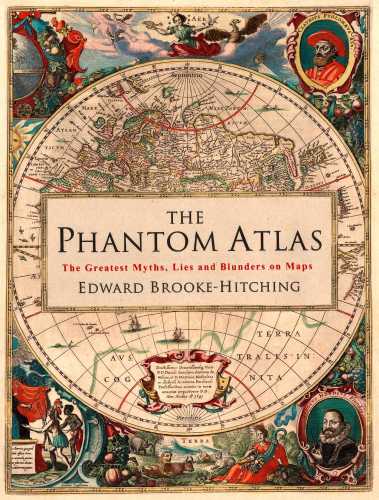
The Phantom AtlasThe Phantom Atlas, Edward Brooke-Hitching’s book about fictitious places that were once presented as real places, came out in the U.K. in November 2016. Though North American buyers could get a copy via online sellers, a proper U.S. edition (Chronicle, 3 April) is now available. The Wall Street Journal, of all places, has a review. Previously: The Phantom AtlasMore on Two Books About Nonexistent Places. Amazon, iBooks (U.K. edition, U.S. edition)

New in April

Zayde Antrim’s Mapping the Middle East (Reaktion, 1 April) “explores the many perspectives from which people have visualized the vast area lying between the Atlantic Ocean and the Oxus and Indus river valleys over the past millennium. By analysing maps produced from the eleventh century on, Zayde Antrim emphasizes the deep roots of mapping in a world region too often considered unexamined and unchanging before the modern period. Indeed, maps from the nineteenth and twentieth centuries, coinciding with the eras of European colonialism and the rise of the nation-state, have obscured this deeper past and constrained future possibilities.” Amazon

Jeremy Black’s Mapping Shakespeare: An Exploration of Shakespeare’s Worlds Through Maps (Conway, 10 April) “looks at the England, Europe, and wider world in which Shakespeare worked through maps and illustrations that reveal the way that he and his contemporaries saw their land and their place in the world. It also explores the locations of his plays and looks at the possible inspirations for these and why Shakespeare would have chosen to set his stories there.” Amazon, iBooks

The Art of Map Illustration: A Step-by-Step Artistic Exploration of Contemporary Cartography and Mapmaking (Walter Foster, 3 April), an illustrated guide featuring the work and method of four map illustrators (James Gulliver Hancock, Hennie Haworth, Stuart Hill and Sarah King), was reviewed on The Map Room earlier this month. Amazon

Related: Map Books of 2018.

The Art of Map Illustration

What do we mean by mapmaking? That’s a less straightforward question than it appears at first glance. A cartographer might talk about projections, scale, use of symbols, deciding which information to put on the map; a digital mapmaker might emphasize GIS and data layers and data sources. Your assumptions about what mapmaking is depends largely on the maps your yourself make. And what we mean by “map” can be quite different depending on the context.

The four illustrators who collaborated on The Art of Map Illustration: A Step-by-Step Artistic Exploration of Contemporary Cartography and Mapmaking (Walter Foster, April 2018) use the terms cartography and mapmaking rather differently. These four—James Gulliver Hancock, Hennie Haworth, Stuart Hill and Sarah King—are illustrators first and foremost. Their maps are neither accurate nor detailed; like decorative nautical charts, they’re not for use in navigation, and they say as much at more than one point. But they can also be seen, I think, as the modern-day descendants of the 20th-century pictorial map (about which see Stephen J. Hornsby’s Picturing America, which I reviewed here last November).

Continue reading “The Art of Map Illustration”

Daily Overview

OverviewDaily Overview is a website that curates spectacular aerial and satellite imagery. Founded by Benjamin Grant, and inspired by the Overview Effect—”the sensation astronauts have when given the opportunity to look down and view the Earth as a whole,” it’s available in virtually every social media format out there; a book, Overview, came out in October 2016. [WMS]

More on Two Books About Nonexistent Places

Two items on books about nonexistent places on maps and other map errors, each of which we’ve heard of before:

  1. The Santa Fe New Mexican has a piece on The Phantom Atlas: The Greatest Myths, Lies and Blunders on Maps by Edward Brooke-Hitching, which came out in the U.K. in late 2016 (previously); that edition is available via Amazon on the U.S. and Canada, but a separate U.S. edition is coming in April from Chronicle. [WMS]
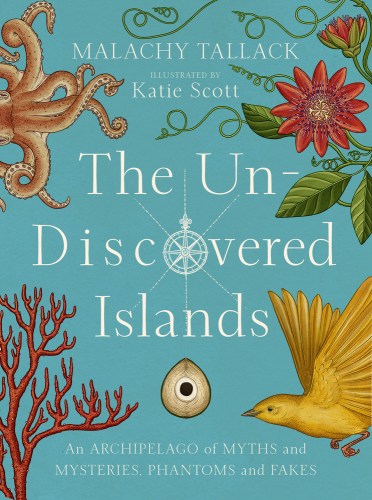
  2. Meanwhile, at National Geographic’s All Over the Map blog, Greg Miller takes a look at The Un-Discovered Islands, Malachy Tallack’s book about phantom islands: places once thought real, but later proven nonexistent. Like The Phantom Atlas, it first saw publication in 2016; its U.S. edition came out last November (previously). Miller’s piece includes examples of such nonexistent places on maps from the Osher Map Library.

Navigation: A Very Short Introduction

The problem with Jim Bennett’s Navigation: A Very Short Introduction (Oxford University Press, May 2017) is summed up in its subtitle: it’s very short, and it’s only an introduction.

Part of Oxford University Press’s Very Short Introductions series, Navigation discusses the tools and methods used by mariners and navigators to find their way across the seas, beginning with various cultures’ ancient navigational techniques, moving through tools like cross-staffs, backstaffs and octants, dealing with the matter of longitude (on which Bennett has some opinions regarding the popular narrative), before wrapping up, too briefly, with modern techologies like radio beacons, inertial navigation and GPS.

There are some illustrations that are a great help in understanding concepts and tools whose use is not immediately obvious, but, as the subtitle suggests, this is not a book that goes into much depth. At only 144 pages—20 percent of which is taken up by front matter, glossary and index—it can only give the barest of introductions to the subject. That can be maddening for the reader, particularly when its coverage is so uneven: there’s a fair bit on the tools and techniques used during the age of sail, but only a paragraph on LORAN and Loran-C, for example. Another frustration is Bennett’s extremely discursive style, as though he were giving a posh invited lecture; I kept feeling that more could have been included had his prose been tightened up.

All the same, there’s value in a book that styles itself, modestly, as an introduction. An introduction is where you begin. It’s the first step, not the finish line. It sets out the parameters of the field and gives you just enough to know what’s out there. For someone like me, it tells me where the gaps are in my knowledge. To paraphrase someone, it lets you know what you do not know. It tells you where to go next: the most useful part of the book may well be its “Further Reading” section; you just need the preceding 116 pages of text to know how to use it.

And for all my concerns about brevity and prose, it’s a good deal more accessible, and easier to read, than the equivalent Wikipedia page—and it went through an editorial process, too. And while it’s not free, it’s very modestly priced. So I have no regrets about buying it.

Amazon | iBooks

Book Roundup for January 2018

Augustine Herrman’s Chesapeake

Augustine Hermann, Henry Faithorne, and Thomas Withinbrook. Virginia and Maryland as it is planted and inhabited this present year 1670, 1673. Map on four sheets, 80 × 95 cm. Library of Congress.

A Biography of a Map in Motion: Augustine Herrman’s Chesapeake by Christian J. Koot, out last month from NYU Press, is an exploration of an iconic map—Virginia and Maryland as it is planted and inhabited this present year 1670 (see above)—and the mapmaker behind it, Augustine Herrman. “[T]he map pictures the Mid-Atlantic in breathtaking detail, capturing its waterways, coastlines, and communities. Herrman spent three decades travelling between Dutch New Amsterdam and the English Chesapeake before eventually settling in Maryland and making this map. Although the map has been reproduced widely, the history of how it became one of the most famous images of the Chesapeake has never been told.”

Monsters on the Map

Surekha Davies’s Renaissance Ethnography and the Invention of the Human: New Worlds, Maps and Monsters (Cambridge University Press) came out in June 2016 (see previous entry). In this podcast episode, Davies speaks with host Michael Robinson about the nature of monsters on old maps, and what they meant to contemporary map readers. Runs 28 minutes and is fascinating listening.

New Books in January 2018

Out this month:

  1. Jeremy Black’s Geographies of an Imperial Power: The British World, 1688-1815 (Indiana University Press), an exploration of “the interconnected roles of power and geography in the creation of a global empire.”
  2. Caren Kaplan’s Aerial Aftermaths: Wartime from Above (Duke University Press), a book about the military uses of aerial imagery that explores “how aerial views operate as a form of world-making tied to the times and places of war.”
  3. The Clyde: Mapping the River by John Moore (Birlinn), a book of maps of “arguably the most evocative of Scottish rivers,” came out in the U.K. last October but is available in North America as of this month.

Map Books of 2018

Finally, the Map Books of 2018 page is now live. This is the page I list all the books scheduled to come out this year. It’s constantly in flux as publication dates change and new books are brought to my attention. If there’s a book coming out in 2018 that should be on this page, let me know.

Two More Books for 2017

The year 2017 is almost at an end, but two more map books, published last month, have just come to my attention (via, as usual, the WMS’s indefatigable Bert Johnson). These, then, are very late additions to the Map Books of 2017 page:

Sad Topographies by Damien Rudd (Simon & Schuster), who “journeys across continents in search of the world’s most joyless place names and their fascinating etymologies.” This appears to be an outgrowth of the author’s sadtopographies Instagram account.1

New Lines: Critical GIS and the Trouble of the Map by Matthew W. Wilson (University of Minnesota Press). “Seeking to bridge a foundational divide within the discipline of geography—between cultural and human geographers and practitioners of Geographic Information Systems (GIS)—Wilson suggests that GIS practitioners may operate within a critical vacuum and may not fully contend with their placement within broader networks, the politics of mapping, the rise of the digital humanities, the activist possibilities of appropriating GIS technologies, and more.”

A Book Roundup

The Routledge Handbook

Out last month, the expensive, 600-page Routledge Handbook of Mapping and Cartography (Routledge). Edited by Alexander J. Kent (who co-wrote The Red Atlas) and Peter Vujakovic, the book “draws on the wealth of new scholarship and practice in this emerging field, from the latest conceptual developments in mapping and advances in map-making technology to reflections on the role of maps in society. It brings together 43 engaging chapters on a diverse range of topics, including the history of cartography, map use and user issues, cartographic design, remote sensing, volunteered geographic information (VGI), and map art.” [The History of Cartography Project]

New Academic Books

New academic books on maps and cartography published over the past couple of months include:

More on Books We’ve Heard of Before

National Geographic interviews Malachy Tallack, the author of The Un-Discovered Islands, and The Guardian shares seven maps from James Cheshire and Oliver Uberti’s Where the Animals Go.

Related: Map Books of 2017.

Literature and Cartography

Here’s a book that, given my interest in maps and literature, I’ll have to track down: Literature and Cartography: Theories, Histories, Genres, edited by Anders Engberg-Pedersen and featuring contributions from 15 other authors. “Literary authors have frequently called on elements of cartography to ground fictional space, to visualize sites, and to help readers get their bearings in the imaginative world of the text. Today, the convergence of digital mapping and globalization has spurred a cartographic turn in literature. This book gathers leading scholars to consider the relationship of literature and cartography. Generously illustrated with full-color maps and visualizations, it offers the first systematic overview of an emerging approach to the study of literature.” Out today from The MIT Press. [Amazon]

2017 Holiday Gift Guide

2017 Holiday Gift Guide

Every year at about this time I post a gift guide that lists some of the noteworthy books about maps that have been published this year. If you have a map-obsessed person in your life and would like to give them something map-related—or you are a map-obsessed person and would your broad hints to have a link—this guide may give you some ideas.

Once again I’ve done my best to organize the books by theme. This is not a complete list of what’s been published in 2017. That’s what the Map Books of 2017 page is for: that page includes many, many other books that might also suggest themselves as gift possibilities.

Recommended

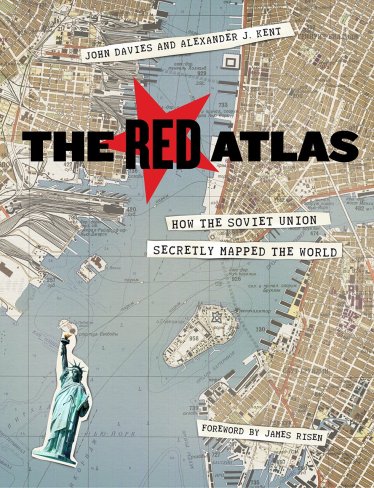
It shouldn’t be a secret that I haven’t seen or read everything on these lists; I go by what information is publicly available. But two books I have seen, and can recommend. Both Stephen J. Hornsby’s Picturing America: The Golden Age of Pictorial Maps (reviewed here) and The Red Atlas: How the Soviet Union Secretly Mapped the World by John Davies and Alex Kent (reviewed here) are beautiful collections of historically significant maps with informative accompanying text.

Continue reading “2017 Holiday Gift Guide”