History of Cartography Project’s Sixth Volume Now Out

History of Cartography Volume 6 (book covers)

The sixth volume of the massive History of Cartography Project, Cartography in the Twentieth Century, is now available. Edited by Mark Monmonier, it takes two physical volumes and nearly two thousand pages to cover mapmaking in the twentieth century—and lists for an eye-popping $500 (U.S.), though it’s a bit cheaper on Amazon.

Volumes one through three are available for free download. Volumes four and five, covering the European Enlightenment and the nineteenth century, respectively, are still in development.

Previously: History of Cartography Project Co-Founder Dies.

Unruly Places (Off the Map)

Book cover: Unruly Places Alastair Bonnett’s Unruly Places (first published in the U.K. as Off the Map) is a light, entertaining exploration of some of the world’s more unusual places. Bonnett, a social geography professor at Newcastle University, has written 47 short essays about locations that, in the grand scheme of things, don’t make any sense: the exceptions, the asterisks, the ink blots (in at least one case literally) on the map.

These range from the deeply frivolous to the profoundly injust: from bits and pieces of New York City transformed into environmental time capsules and art projects to places meaningful to the author; from rendition sites and pirate bases to Bedouin settlements in the Israeli Negev desert; from destroyed landscapes to Potemkin cities. The places often feel almost science-fictional; and in fact several of them evoked settings in existing science fiction works, like Christopher Priest’s Dream Archipelago and Maureen McHugh’s Nekropolis.

All in all, a pleasant diversion for the geographically minded, though I did have one quibble: the book calling latitude and longitude “Google Earth coordinates,” as though degrees are as proprietary as limited to the KML format.

Amazon | iBooks: Canada, U.K., U.S.

Atlas of Canada

Book cover: Atlas of Canada I only just now found out about the new edition of Canadian Geographic‘s Atlas of Canada—via an item broadcast on CTV yesterday—or I would have included it in this year’s gift guide. It’s apparently the first new edition in a decade. (Incidentally this should not be confused with the Canadian government’s online Atlas of Canada, an entirely distinct beast.)

Gift Guide: 10 Map Books of 2014

Every year, at about this time of year, I assemble a gift guide listing some of the noteworthy books about maps that have been published over the previous year. This list is by no means comprehensive, but if you have a map-obsessed person in your life and you’d like to give that person a map-related gift, this list might give you some ideas.

This year’s list includes several lavishly illustrated histories of maps and globes, interesting reads about map thieves and forgotten places, an a couple of guides to map art and personal mapmaking.

Once again, books bought through these Amazon affiliate links (routed to what my web server thinks is your nearest English-language Amazon store) make me a little money. Thanks for your support.

Continue reading “Gift Guide: 10 Map Books of 2014”

Mapping It Out

Book cover: Mapping It Out In Mapping It Out: An Alternative Atlas of Contemporary Cartographies, out now from Thames & Hudson, editor Hans Ulrich Obrist invited contributors “to create a personal map of their own, in whatever form and showing whatever terrain they choose, whether real-world or imaginary.” Examples of the results can be found on the websites of Design Week, FT Magazine and the Guardian; the New Yorker has posted an excerpt from Tom McCarthy’s introduction.

A Book About the Forbes Smiley Affair

Book cover: The Map Thief In 2005 and 2006 my map blog, The Map Room, was full of posts about one E. Forbes Smiley III, who had been caught stealing rare maps from the Beinecke Library at Yale University. As is often the case with map thieves, Smiley was found to be responsible for many other map thefts from other libraries, and suspected in other thefts. Smiley was sentenced to 30 months in prison. (I posted a lot about the Smiley case: see The Map Room’s Map Thefts category archives.)

I knew there would have to be a book on the Smiley case at some point, and one is coming out next month: The Map Thief, whose author, Michael Blanding, has managed to interview Smiley himself, and promises new information about the case. I’m really looking forward to seeing how well Blanding has managed to tell this particular tale, which consumed so much of my attention seven or eight years ago.

Art and Personal Mapmaking

Book cover: Map Art LabBook cover: Make Map Art

Two books (well, one is sort of book-ish) related to map art and personal cartography to tell you about:

  1. Map Art Lab: 52 Exciting Art Explorations in Mapmaking, Imagination, and Travel by Jill K. Berry and Linden McNeilly (Quarry Books, 5/14): “map-related activities set into weekly exercises, beginning with legends and lines, moving through types and styles, and then creating personalized maps that allow you to journey to new worlds.”
  2. Make Map Art: Creatively Illustrate Your World by Nate Padavick and Salli Swindell (Chronicle Books, 2/14), a “creative toolkit” that includes a booklet and 30 pull-out sheets to use as templates for personal mapmaking projects.

Jill Kelly’s previous work, Personal Geographies: Explorations in Mixed-Media Mapmaking, was reviewed here in 2011 [Fuck Yeah Cartography].

A Book About Globes

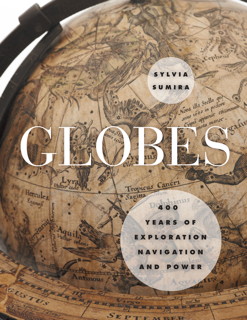
Book cover: Globes Sylvia Sumira’s forthcoming book on globes—titled Globes: 400 Years of Exploration, Navigation and Power in its U.S. edition and The Art and History of Globes in its British edition—is a history of globemaking during its peak: “Showcasing the impressive collection of globes held by the British Library, Sumira traces the inception and progression of globes during the period in which they were most widely used—from the late fifteenth century to the late nineteenth century—shedding light on their purpose, function, influence, and manufacture, as well as the cartographers, printers, and instrument makers who created them.” Out next month from University of Chicago Press (for North America) and in April from the British Library (Commonwealth markets): Amazon. [Boing Boing]

More Map Books

Book cover: Mr. Selden's Map of ChinaBook cover: Golden Age of Maritime MapsBook cover: Maps of ParadiseBook cover: International Atlas of Mars Exploration

Here are some map books that I recently found out about:

Review: A History of the World in Twelve Maps

If somebody who was vaguely interested in maps wanted a book to get them started, I think I might point them toward A History of the World in Twelve Maps, written by Renaissance Studies professor Jerry Brotton. This book first appeared in September 2012 in Great Britain, where it’s now out in paperback. The U.S. edition came out last month in hardcover.

It’s a history of cartography that takes a rather unique approach: instead of providing a straight narrative history, Brotton focuses on twelve maps (or, more precisely, mapmaking endeavours), ranging from Ptolemy’s Geography to Google Earth. But Brotton does a lot more than talk about just twelve maps.

Continue reading “Review: A History of the World in Twelve Maps”

Unfathomable City

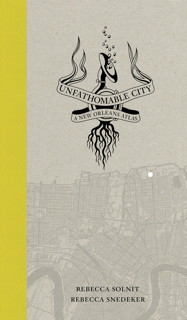
Book cover: Unfathomable City Unfathomable City: A New Orleans Atlas, by Rebecca Solnit and Rebecca Snedeker, came out last month from University of California Press. At first glance it looks like it does for New Orleans what Solnit’s previous work, Infinite City, did for San Francisco: it’s a collection of essays and maps that, as before, displays two complementary or contrasting things on the same city map. In my review of Infinite City I suggested that not every city could sustain a project like this, though San Francisco obviously could; it seems to me that New Orleans is a natural followup.

The Barrington Atlas Comes to the iPad

At a list price of $395, the print version of the Barrington Atlas of the Greek and Roman World (Princeton University Press, 2000), was more expensive than some iPads. Which makes the forthcoming iPad version of the Atlas, described in the announcement as “complete content of the classic reference work,” a veritable bargain at only $20.

In 102 interactive color maps, this app re-creates the entire world of the Greeks and Romans from the British Isles to the Indian subcontinent and deep into North Africa. Unrivaled for range, clarity, and detail, these custom-designed maps return the modern landscape to its ancient appearance, marking ancient names and features in accordance with modern scholarship and archaeological discoveries. Geographically, the maps span the territory of more than seventy-five modern countries. Chronologically, they extend from archaic Greece to the Late Roman Empire.

It’ll be available on November 21: plenty of time for me to get a new iPad Air by then (it works on all iPads except the original).

Previously: Barrington Atlas.

Sea Monsters and the Carta Marina

Carta Marina (top)

Book cover: Sea Monsters (Nigg)It looks like 2013 is the Year of Sea Monsters on Maps. Earlier this year we saw Chet Van Duzer’s Sea Monsters on Medieval and Renaissance Maps (my review); now comes a new study that focuses on a single sixteenth-century map and its many illustrations of seagoing critters: the Carta Marina (1539) by Swedish ecclesiastic Olaus Magnus. Joseph Nigg’s Sea Monsters: The Lore and Legacy of Olaus Magnus’s Marine Map was published last month in the United Kingdom by Ivy Press; in the United States and Canada it’s available from the University of Chicago Press under the title Sea Monsters: A Voyage around the World’s Most Beguiling Map. From the University of Chicago Press page:

Nearly two meters wide in total, the map’s nine wood-block panels comprise the largest and first realistic portrayal of Northern Europe. But in addition to these important geographic elements, Magnus’s map goes beyond cartography to scenes both domestic and mystic. Close to shore, Magnus shows humans interacting with common sea life—boats struggling to stay afloat, merchants trading, children swimming, and fisherman pulling lines. But from the offshore deeps rise some of the most magical and terrifying sea creatures imaginable at the time or thereafter—like sea swine, whales as large as islands, and the Kraken. In this book, Nigg provides a thorough tour of the map’s cartographic details, as well as a colorful look at its unusual pictorial and imaginative elements. He draws on Magnus’s own text to further describe and illuminate the inventive scenes and to flesh out the stories of the monsters.

Buy at Amazon