Digital Geologic Map of Alaska

A new geologic map of Alaska has been published by the U.S. Geological Survey. From the USGS release: “This map is a completely new compilation, carrying the distinction of being the first 100 percent digital statewide geologic map of Alaska. It reflects the changes in our modern understanding of geology as it builds on the past. More than 750 references were used in creating the map, some as old as 1908 and others as new as 2015. As a digital map, it has multiple associated databases that allow creation of a variety of derivative maps and other products.” The map is available traditionally in two PDF sheets, as well as in geodatabase, Shapefile and other database formats.

The place needs decorating and a new coat of paint, there’s still a ton of things to do to make it feel like home, and more than a few glitches that still need fixing, but it looks like the structure will stay up and keep the inside dry and warm. Time to open the doors.

In other words: welcome back to The Map Room.

It feels good to be back at this.

Designing Better Maps Reviewed

DesigningBetterMaps_lg Gretchen Peterson reviews the second edition of Cynthia Brewer’s Designing Better Maps: A Guide for GIS Users (Esri Press, December 2015). “I’d say it’s much better than the previous edition. All the images have been updated and are now in keeping with modern cartography practices. All the typical things that you need to know are covered from fonts and labels to color and layout.” Buy at Amazon (Canada, U.K.)

Map of Colonial New Jersey Rediscovered

colonial-nj

A 1769 map of New Jersey by the famed colonial surveyor Bernard Ratzer, commissioned to settle a longstanding border dispute between New Jersey and New York, has been uncovered by a Harvard University librarian. The map, criss-crossed by competing and alternate boundary lines, has been digitized and is available to view online as part of Harvard’s Colonial North American project.

Mapping the Thaw

Scientists have been tracking seasonal freeze-thaw patterns for 30 years. This map, produced from data collected by NASA’s Soil Moisture Active Passive satellite, “shows the freeze-thaw status of areas north of 45 degrees latitude on March 5, 2015, as spring approached. Frozen land is blue; thawed land is pink. The measurement is possible because frozen water forms crystalline structures that can be detected by satellites.” NASA Earth Observatory.

Maps and Poetry

I’m not alone in looking at the use of maps in fantasy literature; Hunter College classics professor Adele Haft, on the other hand, has been studying something a bit more singular: the use of maps in modern poetry. According to her CV she’s published a number of papers on poems like “The Map” by Elizabeth Bishop; more recently she’s been publishing, in Cartographic Perspectives, a multi-part study of Australian poet Kenneth Slessor’s poetic sequence The Atlas: introduction, part one, part two, part three, part four.

How the Mercator Projection Won the Internet

OpenStreetMap, using Web Mercator, all zoomed out
OpenStreetMap

I’ve said it before: if you want to start a fight among cartographers, ask them what their favourite map projection is. Earlier this week I did just that: I felt mischievous and wanted to try out Twitter’s polling feature, so I ran a poll asking my Map Room followers what the best projection for world maps was. And because I was feeling particularly mischievous, I made sure to include both the often-reviled Mercator projection and its antithesis, the Peters projection, rounding out the list with two less controversial choices: the Winkel tripel projection used by National Geographic, and the brand-new Patterson projection announced late last year.

The results of the poll were utterly unexpected: 42 percent chose the Mercator projection.

Continue reading “How the Mercator Projection Won the Internet”

Gift Guide: Map Books of 2015

At about this time of the year I assemble a gift guide that lists some of the noteworthy books about maps that have been published this year. It’s by no means a comprehensive list, but if someone in your life is just a little bit obsessed about maps (and if you don’t have such a person, why don’t you?), and you’re looking for something to get them, this list might be of use.

Some of these books you’ve seen me blog about before; others I’m mentioning for the first time.

Continue reading “Gift Guide: Map Books of 2015”

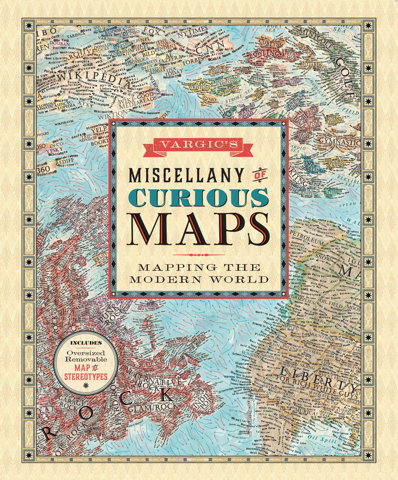
Vargic’s Miscellany of Curious Maps

Vargic's Map of the Internet 2.0 (detail)

Vargic's Miscellany of Curious Maps (book cover)In January 2014 a teenage design student from Slovakia named Martin Vargic posted a map of the Internet—inspired, he told The Independent, by the xkcd classic—on his DeviantArt page. The map quickly went viral. Since then, he’s been producing maps of all sorts of things—a revised Internet map, a literature map, historical maps, maps of the world after global warming and an ice age, a stereotype map (see previous entry), plus other infographics—at a dizzying pace, most of which are available for sale on his website. Now his maps are being collected in a book, Vargic’s Miscellany of Curious Maps. It’s out now in the U.K. from Penguin imprint Michael Joseph; in North America it’ll be available in December from HarperCollins. Did I mention he’s a teenager?

Map of Middle-earth, Annotated by Tolkien Himself, Discovered

Detail of map of Middle-earth annotated by J. R. R. Tolkien

A map of Middle-earth annotated by J. R. R. Tolkien has been found. The map, found among the papers of illustrator Pauline Baynes, who died in 2008, was used by Baynes while she worked on a full-colour map of Middle-earth published in 1970. Tolkien’s annotations appear on the map in green ink and pencil; they not only correct some of the errors of the original map (executed by his son, Christopher); they also offer some geographical parallels to our own world (Hobbiton is at the same latitude as Oxford, Minas Tirith at Ravenna’s). Blackwell’s Rare Books is selling the map for £60,000; it’s the centrepiece of a forthcoming catalogue on the work of Pauline Baynes. [Tor.com]

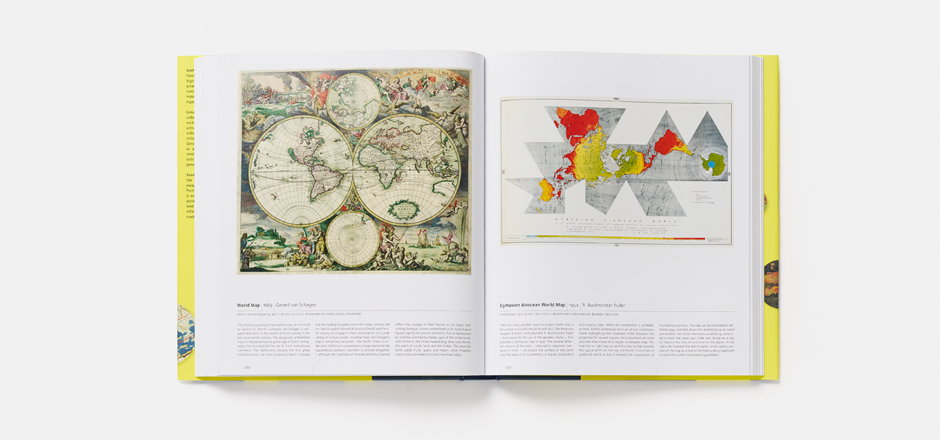
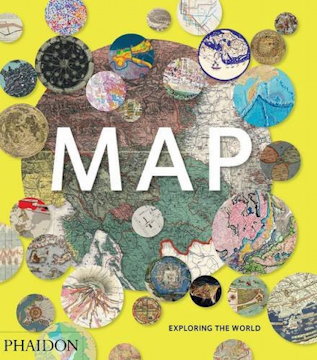
Map: Exploring the World

Map: Exploring the World (inside)

Map: Exploring the World (cover) The run-up to every holiday season produces a fresh batch of lavishly illustrated map books, and this year does not appear to be an exception. Map: Exploring the World, a collection of “300 stunning maps from all periods and from all around the world,” came out last month from Phaidon Press. The book was assembled by “an international panel of cartographers, academics, map dealers and collectors,” the publisher says; Forbes contributor Bruce Dorminey’s look at this book reveals that one of them was Library of Congress map curator John Hessler.