Though the effects of the Gulf Stream were known to seafarers for centuries, Benjamin Franklin was the first to name it and chart it. The Library of Congress’s map blog has a post about the maps of the Gulf Stream produced by Franklin with his cousin, Timothy Folger, a ship captain who knew the currents. “Folger and Franklin jointly produced a chart of the Gulf Stream in 1768, first published in London by the English firm Mount and Page. The Geography and Map Division holds one of only three known copies of this first edition (see above), in addition to a copy of the ca. 1785 second edition.”
Category: Antique Maps
Mapping Indiana
Mapping Indiana: Five Centuries of Treasures is an exhibition of maps from the collection of the Indiana Historical Society. “Featuring several original—and some never before seen—pieces from our collection, Mapping Indiana explores the ways we think about maps, how we use them and how they have helped to shape Indiana.” From January 16 to April 2 at the Society’s Eugene and Marilyn Glick Indiana History Center in downtown Indianapolis. [via]
Metropolis: Mapping the City
Nicolas Crane reviews Jeremy Black’s Metropolis: Mapping the City (Conway, October 2015) for Geographical magazine. “The aim is to explore through time the visualisation of cities, so we start with a terracotta plan of the Mesopotamian holy city of Nippur, in what is now Iraq, then travel through Renaissance cities, New World cities, Imperial cities and mega cities. […] If you’ve ever wondered why cities work, you’ll find the answer in this beautiful book.” Buy at Amazon (Canada, U.K.)
NYPL Offers High-Quality Downloads of 180,000 Public-Domain Documents
Yesterday the New York Public Library made available high-quality downloads of some 180,000 public-domain photographs, postcards, maps and other items from its digital collection—of which more than 21,000 are maps, based on my quick search. I can see spending an awful lot of time poking around in there, can’t you?
The Railway Atlas of Scotland
Also from Birlinn, The Railway Atlas of Scotland: Two Hundred Years of History in Maps by David Spaven, which came out last October.
Previously: British Railways, Past and Present.
Glasgow: Mapping the City
The National’s Alan Taylor reviews Glasgow: Mapping the City by John Moore (Birlinn, October 2015), an illustrated book of maps of the city dating back to the 16th century (via). This is one of several map books published by Birlinn that cover the history of Scotland in maps: previous volumes include Edinburgh: Mapping the City by Christopher Fleet and Daniel MacCannell (2014) and Scotland: Mapping the Nation by Christopher Fleet, Charles W. J. Withers and Margaret Wilkes (2012).
Map of Colonial New Jersey Rediscovered
A 1769 map of New Jersey by the famed colonial surveyor Bernard Ratzer, commissioned to settle a longstanding border dispute between New Jersey and New York, has been uncovered by a Harvard University librarian. The map, criss-crossed by competing and alternate boundary lines, has been digitized and is available to view online as part of Harvard’s Colonial North American project.
Map: Exploring the World
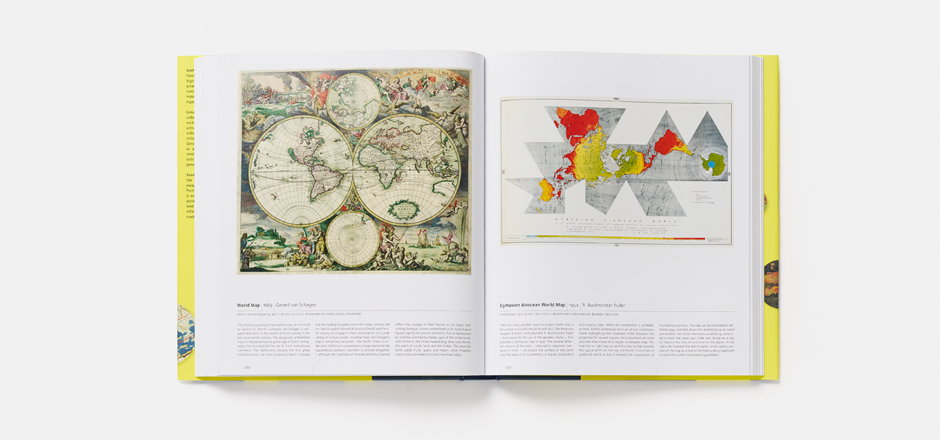
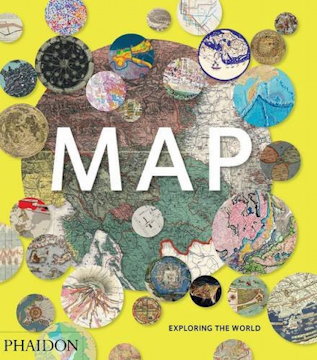
The run-up to every holiday season produces a fresh batch of lavishly illustrated map books, and this year does not appear to be an exception. Map: Exploring the World, a collection of “300 stunning maps from all periods and from all around the world,” came out last month from Phaidon Press. The book was assembled by “an international panel of cartographers, academics, map dealers and collectors,” the publisher says; Forbes contributor Bruce Dorminey’s look at this book reveals that one of them was Library of Congress map curator John Hessler.
Review: The Map Thief
E. Forbes Smiley III was a well-known and well-connected map dealer, an expert who helped build the Slaughter and Leventhal map collections. Then in 2005 he was caught—on videotape—stealing maps from Yale University’s Beinecke Library. Libraries he had frequented scrambled to check their own holdings and found additional maps missing. Smiley, who cooperated with the authorities, would eventually be sentenced to 3½ years for stealing nearly 100 maps from the British, Boston Public, New York Public, Harvard and Yale libraries, among others. The libraries believed he stole many more.
With The Map Thief, Michael Blanding presents a book-length exploration of the Forbes Smiley affair, which stunned map collectors and map libraries alike in 2005. Its publication, coming nine years after Smiley’s arrest and four years after his release from prison, is something of an anticlimax, especially for those of us who followed the case so closely as it unfolded (I blogged about it more than 60 times, myself).
Map thieves fascinate us, even if they themselves are not that fascinating (see, for example, the essential blandness of Gilbert Bland, the subject of a previous book about map thefts, Miles Harvey’s Island of Lost Maps), because of what they steal. As stolen goods, antique maps are a curiosity: like art, but more stealable, because there are few copies, not just one.
A Book About the Forbes Smiley Affair
In 2005 and 2006 my map blog, The Map Room, was full of posts about one E. Forbes Smiley III, who had been caught stealing rare maps from the Beinecke Library at Yale University. As is often the case with map thieves, Smiley was found to be responsible for many other map thefts from other libraries, and suspected in other thefts. Smiley was sentenced to 30 months in prison. (I posted a lot about the Smiley case: see The Map Room’s Map Thefts category archives.)
I knew there would have to be a book on the Smiley case at some point, and one is coming out next month: The Map Thief, whose author, Michael Blanding, has managed to interview Smiley himself, and promises new information about the case. I’m really looking forward to seeing how well Blanding has managed to tell this particular tale, which consumed so much of my attention seven or eight years ago.
A Book About Globes
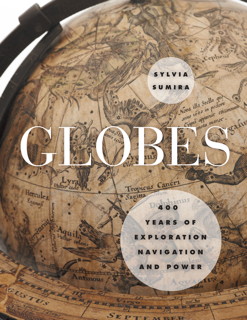
Sylvia Sumira’s forthcoming book on globes—titled Globes: 400 Years of Exploration, Navigation and Power in its U.S. edition and The Art and History of Globes in its British edition—is a history of globemaking during its peak: “Showcasing the impressive collection of globes held by the British Library, Sumira traces the inception and progression of globes during the period in which they were most widely used—from the late fifteenth century to the late nineteenth century—shedding light on their purpose, function, influence, and manufacture, as well as the cartographers, printers, and instrument makers who created them.” Out next month from University of Chicago Press (for North America) and in April from the British Library (Commonwealth markets): Amazon. [Boing Boing]
Two More Map Books
Two more map books, this time of an academic bent:
- London: The Selden Map and the Making of a Global City, 1549-1689 by Robert K. Batchelor (University of Chicago Press, 1/14). Batchelor uses the information on the Selden Map to demonstrate how the city of London “flourished because of its many encounters, engagements, and exchanges with East Asian trading cities.” (Amazon)
- Map Worlds: A History of Women in Cartography by Will C. van den Hoonaard (Wilfrid Laurier University Press, 8/13). “[A] journey of discovery through the world of women map-makers from the golden age of cartography in the sixteenth-century Low Countries to tactile maps in contemporary Brazil.” (Amazon)
More Map Books
Here are some map books that I recently found out about:
- Mr. Selden’s Map of China: Decoding the Secrets of a Vanished Cartographer by Timothy Brook (Bloomsbury Press/House of Anansi Press/Profile Books, 9/13). A book-length study of the enigmatic Selden Map of China, donated to the Bodleian Library in 1659 and only rediscovered in 2009. (Amazon)
- The Golden Age of Maritime Maps: When Europe Discovered the World by Catherine Hoffman, Hélène Richard and Emmanuelle Vagnon (Firefly Books, 9/13). One of those big, illustrated books of old maps; this one looks at portolan charts. It’s an English translation of L’Âge d’or des cartes marines. (Amazon)
- Maps of Paradise by Alessandro Scafi (University of Chicago Press, 11/13). Explores “the diverse ways in which scholars and mapmakers from the eighth to the twenty-first century rose to the challenge of identifying the location of paradise on a map, despite the certain knowledge that it was beyond human reach.” (Amazon)
- The International Atlas of Mars Exploration: The First Five Decades, 1953 to 2003 by Philip J. Stooke (Cambridge University Press, 9/12). The first of two volumes (the second will be subtitled Spirit to Curiosity) that maps the extent of exploration by orbiters and landers. (Amazon, author’s page)
Review: A History of the World in Twelve Maps
If somebody who was vaguely interested in maps wanted a book to get them started, I think I might point them toward A History of the World in Twelve Maps, written by Renaissance Studies professor Jerry Brotton. This book first appeared in September 2012 in Great Britain, where it’s now out in paperback. The U.S. edition came out last month in hardcover.
It’s a history of cartography that takes a rather unique approach: instead of providing a straight narrative history, Brotton focuses on twelve maps (or, more precisely, mapmaking endeavours), ranging from Ptolemy’s Geography to Google Earth. But Brotton does a lot more than talk about just twelve maps.
Continue reading “Review: A History of the World in Twelve Maps”
Sea Monsters and the Carta Marina
It looks like 2013 is the Year of Sea Monsters on Maps. Earlier this year we saw Chet Van Duzer’s Sea Monsters on Medieval and Renaissance Maps (my review); now comes a new study that focuses on a single sixteenth-century map and its many illustrations of seagoing critters: the Carta Marina (1539) by Swedish ecclesiastic Olaus Magnus. Joseph Nigg’s Sea Monsters: The Lore and Legacy of Olaus Magnus’s Marine Map was published last month in the United Kingdom by Ivy Press; in the United States and Canada it’s available from the University of Chicago Press under the title Sea Monsters: A Voyage around the World’s Most Beguiling Map. From the University of Chicago Press page:
Nearly two meters wide in total, the map’s nine wood-block panels comprise the largest and first realistic portrayal of Northern Europe. But in addition to these important geographic elements, Magnus’s map goes beyond cartography to scenes both domestic and mystic. Close to shore, Magnus shows humans interacting with common sea life—boats struggling to stay afloat, merchants trading, children swimming, and fisherman pulling lines. But from the offshore deeps rise some of the most magical and terrifying sea creatures imaginable at the time or thereafter—like sea swine, whales as large as islands, and the Kraken. In this book, Nigg provides a thorough tour of the map’s cartographic details, as well as a colorful look at its unusual pictorial and imaginative elements. He draws on Magnus’s own text to further describe and illuminate the inventive scenes and to flesh out the stories of the monsters.