Helen Wallis was one of the leading figures in map librarianship who pioneered the study of cartography. She was the first woman to hold the position of Map Librarian, following on from her predecessor R.A. Skelton (1906-1970) in 1967. Over 19 years she made the British Library the centre for map studies through research, publications and exhibitions including the Cook bicentenary exhibition of 1968, the American War of Independence exhibition of 1975 and the Francis Drake exhibition of 1977.
A research fund for visiting scholars has also been set up in her name; details at the link.
The Chiswick Timeline, a public mural of historic maps of Chiswick, London, situated along the walls of the underpass next to the Turnham Green tube station, opened earlier this month. A project of Abundance London, the mural is a series of panels reproducing maps of Chiswick from as early as the late 16th century, and traces its development into the London suburb it is today. An accompanying fold-out book is also available. [Londonist]
Some of the maps presented in this exhibit include Stephen F. Austin’s landmark 1830 map of Texas, unique plat maps that show Native American trails, one-of-a-kind manuscript military maps of the Republic and State of Texas, German immigration maps of the Texas Hill Country, hand-drawn railroad maps created to illustrate the progress of construction of railways across the state, cattle and trail maps from the 1880s, and interesting maps of Hemisfair ’68 in San Antonio, and much more.
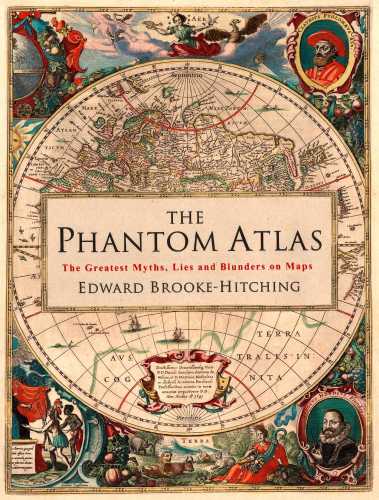
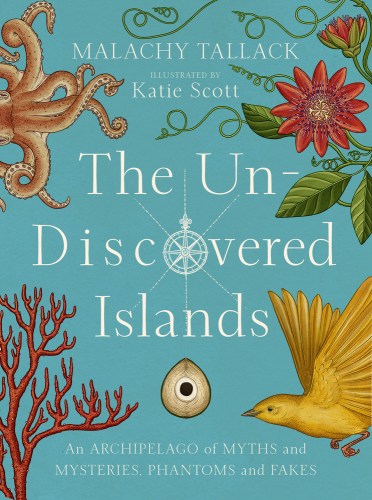
Meanwhile, at National Geographic’s All Over the Map blog, Greg Miller takes a look at The Un-Discovered Islands, Malachy Tallack’s book about phantom islands: places once thought real, but later proven nonexistent. Like The Phantom Atlas, it first saw publication in 2016; its U.S. edition came out last November (previously). Miller’s piece includes examples of such nonexistent places on maps from the Osher Map Library.
In the real world, Urbano Monte’s 1587 map of the world exists as a series of 60 manuscript sheets designed to be assembled into a large world map—one that would be, at 10 feet square, the largest early world map known to exist.1As the David Rumsey Map Collection explains, “the whole map was to be stuck on a wooden panel 5 and a half brachia square (about ten feet) so that it could be revolved around a central pivot or pin through the north pole.”
But with only two copies known to exist, that ain’t happening. So what the Rumsey Collection has done, with the copy they recently acquired via Barry Ruderman, is to do it virtually, creating a digital edition of the map as a single image (see above). The digital Monte map was apparently revealed at the Ruderman Conference last October (previously).
The Rumsey Collection’s blog post has lots of images of the individual sheets, and explains how digitizing the map explains Monte’s choice of projection:
Monte wanted to show the entire earth as close as possible to a three-dimensional sphere using a two-dimensional surface. His projection does just that, notwithstanding the distortions around the south pole. Those same distortions exist in the Mercator’s world map, and by their outsized prominence on Monte’s map they gave him a vast area to indulge in all the speculations about Antarctica that proliferated in geographical descriptions in the 16th century. While Mercator’s projection became standard in years to come due to its ability to accurately measure distance and bearing, Monte’s polar projection gave a better view of the relationships of the continents and oceans.
The Mercator version of Monte’s map is here. A Google Earth KMZ file of the map as a digital globe is here. For background on Monte’s map, see the accompanying essay by Katherine Parker, “A Mind at Work” (PDF). For more coverage, see All Over the Map’s blog post.
Clausen guesses that the forgery was done in the 1940s or 1950s (“The prime forgery suspect is Carl Schweidler, whom Clausen calls ‘probably the best paper restorer of the 20th century.’”);
The reason why Christie’s was led astray was that one of the reference gores—the Bavarian State Library’s—was also a fake (that latter fact has already come out, but this article doesn’t gloss over its importance); and
Barry Ruderman, Clausen’s boss, guesses that this is only the tip of the forgery iceberg.
Map of the Holy Land in Claudii Ptolemaei Alexandrini Geographicae enarrationis libri octo. Michael Servetus, 1535. Geography and Map Division, Library of Congress.
Last November the Library of Congress’s map blog, Worlds Revealed, published Cynthia Smith’s interesting piece on Michael Servetus, a Renaissance theologian who, in 1553, Calvin had burned at the stake, along with his books, for heresy. One of those books was a 1535 edition of Ptolemy’s Geography, and while that book was not one that got him into trouble in the first place, it was used against him at his trial.
A map of the Holy Land is shown on Plate 41, seen below, while the text on the verso, below the map, describes it as an “inhospitable and barren land,” which was considered by the religious authorities to be blasphemous. Servetus was arrested and underwent trial in Geneva for his other religious writings but this text was used as evidence at his trial. Calvin asserted that the text had contradicted the description of the Holy Land in the Book of Exodus as a “land flowing with milk and honey.” […] Ironically, the controversial passage was not original to Servetus but was simply copied by him from previous editions of Ptolemy’s Geography which were published in 1522 and 1525 by another physician named Laurent Fries.
Augustine Hermann, Henry Faithorne, and Thomas Withinbrook. Virginia and Maryland as it is planted and inhabited this present year 1670, 1673. Map on four sheets, 80 × 95 cm. Library of Congress.
A Biography of a Map in Motion: Augustine Herrman’s Chesapeake by Christian J. Koot, out last month from NYU Press, is an exploration of an iconic map—Virginia and Maryland as it is planted and inhabited this present year 1670 (see above)—and the mapmaker behind it, Augustine Herrman. “[T]he map pictures the Mid-Atlantic in breathtaking detail, capturing its waterways, coastlines, and communities. Herrman spent three decades travelling between Dutch New Amsterdam and the English Chesapeake before eventually settling in Maryland and making this map. Although the map has been reproduced widely, the history of how it became one of the most famous images of the Chesapeake has never been told.”
The Clyde: Mapping the River by John Moore (Birlinn), a book of maps of “arguably the most evocative of Scottish rivers,” came out in the U.K. last October but is available in North America as of this month.
Map Books of 2018
Finally, the Map Books of 2018 page is now live. This is the page I list all the books scheduled to come out this year. It’s constantly in flux as publication dates change and new books are brought to my attention. If there’s a book coming out in 2018 that should be on this page, let me know.
Still more coverage of the cancelled auction of the Waldseemüller globe gores that were later identified as fakes, this time from the Houston Chronicle, which pursues the local-interest angle by talking to Michal and and Lindsay Peichl, restorers from Clear Lake, Texas (their firm is Paper Restoration Studio) who were brought in to examine the gores along with other experts. Michal says it didn’t take him long to figure it out:
“My first reaction when I saw the picture was, ‘Oh my God, this is a fake,'” said Michal. “You could tell this was a sheet of paper pulled from a book binding board.
“It was printed on a piece of paper that used to be glued on the back of book and that was a red flag to me because as a forger, if you want to make a fake, that’s where you would go to get a clean sheet of paper.”
Nicolo Zeno and Girolamo Ruscelli, Septentrionalivm partivm nova tabvla, 1561.
Atlas Obscura has the odd and fascinating story of how a Venetian named Nicolò Zeno created an island in the middle of the North Atlantic called Frisland, in an apparent attempt to claim that Venetian explorers had discovered the New World. After it appeared on Zeno’s 1558 map, it persisted on other maps for a century afterward (it was even claimed for England in 1580), and the existence of Frisland itself was not fully debunked for a long time after that. “The answer to Zeno’s enduring success lies not with his works, but with his audience. For centuries, people believed Zeno because they wanted to believe him. That was Zeno’s true stroke of genius. He created a story too tantalizing for people to ignore.”
Out last month, the expensive, 600-page Routledge Handbook of Mapping and Cartography (Routledge). Edited by Alexander J. Kent (who co-wrote The Red Atlas) and Peter Vujakovic, the book “draws on the wealth of new scholarship and practice in this emerging field, from the latest conceptual developments in mapping and advances in map-making technology to reflections on the role of maps in society. It brings together 43 engaging chapters on a diverse range of topics, including the history of cartography, map use and user issues, cartographic design, remote sensing, volunteered geographic information (VGI), and map art.” [The History of Cartography Project]
New Academic Books
New academic books on maps and cartography published over the past couple of months include:
More on the cancelled auction of the Waldseemüller globe gores from Minneapolis-St. Paul TV station KARE, which looks at the work by the James Ford Bell Library that raised questions about the authenticity of the gores that Christie’s was set to auction last week. And a seriously buried lede: another set of Waldseemüller globe gores may not be authentic either: “During this process, experts also discovered that a copy at the Bavarian State Library in Germany may not be authentic, as well. Ragnow said that copy matches closely with the 2017 Christie’s one.” [WMS]
This is a bombshell. Christie’s has cancelled its upcoming auction of a (supposedly) newly discovered copy of Waldseemüller’s globe gores. Experts found evidence suggesting that the gores were a carefully faked copy of the gores found in the James Ford Bell Library. In today’s New York Times, Michael Blanding (who wrote a book on the Forbes Smiley affair) has the scoop on how the red flags were raised. The auction was supposed to take place on Wednesday; the gores were expected to fetch between £600,000 and £900,000.